Labels

Sunday, 23 April 2017

Evaluation 1


In what ways does the media product use, develop or challenge forms and conventions of real media products?


This year's project was to create a 5 minute short film, along with a radio trailer and poster to promote it. I found this year's task much more challenging than last year's as the film had to be much longer, meaning we had to write a longer script, and spend much more time filming and editing. The film we decided to make depicts the lead character, Georgie, attempting to overcome her PTSD after returning from the war.

Genre - 
In the planning stage, we decided we wanted to make a drama, which is why we chose centre the film around the aftermath of Georgie's tour of Afghanistan. This allowed us to capture the emotion surrounding the loss of her friend Charlotte, and explore a subject that, although affects many people, isn't often tackled by the media. By making our film a drama, we were able to explore PTSD, and how it affects people, in a respectful and sincere way.

I think our film fits the stereotype of a drama as it follows the life of a character, depicting a time of hardship and them trying to overcome it. Our film is also realistic, which fits into the stereotype of a drama. In the planning stages we considered the film to have a hybrid genre, drama and war.  However, after some consideration we decided the film was better suited to being a pure drama, due to it's specific focus on the effects of war on Georgie's mental state, rather than her actual time on tour. 
Some of the main conventions of drama are:
  • Realistic characters, settings and stories - We used the realistic setting of a house and a psychologist's office, along with the storyline of a woman suffering from mental illness. 
  • Portrays a journey of character development - Although our film is short, it depicts part of Georgie's recovery from PTSD and her realisation that Charlotte is a figment of the imagination.
  • Centred around conflict, hardships or pain - Georgie faces internal conflict with her own mind, which manifests itself externally through her 'arguments' with Charlotte. 
  • A form of realisation at the end/happy ending- Georgie comes to realise that Charlotte is part of her imagination with the help of the psychologist. 


Arguably, our film subverts some expectations of drama, as the ending is not exactly a happy one. Although Georgie begins her road to recovery, she loses her friend indefinitely, and is left alone. This subversion of convention can be seen in 'Titanic', as although it conforms to many aspects of the drama genre, it ends sadly with the death of the protagonist. Another influence of our film is 'Growth' by Elliot Gough, as it involves many similar themes, such as imaginary people. However, the film's main focus is a breakup, rather than a death.
 Poster for 'Growth' by Elliot Gough


Pink hair at the start of filming
Continuity - 
One of the main difficulties we encountered was continuity and making sure everything was kept the same across the weeks of filming. The girl playing Charlotte changed her hair style and colour multiple times during the filming process, which proved challenging to accommodate, but we resolved this issue by re shooting some of the earlier scenes, with her hair covered. 

We accommodated this by covering her hair

Brown hair by the end of filming
Another continuity issue was the decorations in Georgie's house as it was Christmas when some of the scenes were filmed. Because of this, we had to re-shoot some of the interior scenes. Although seemingly problematic, re-shooting scenes allowed us to change other aspects we weren't happy with, such as lighting and background noise. Overall, this extra input allowed us to create a much better film in the end, and revealed that even with strategic planning, you can run into difficulties and experience errors. 

In order to create sound continuity, we used sound bridges and dissolves between clips to allow a smoother transition from the noisy outside to the quiet inside scenes. Evidence of this can be found in our final film here.


Some continuity errors in real life media products include:

  • The iconic scene from 'Spider-Man' (2002), where the window is broken, and then not broken in the next scene.
  • Merry and Pippin are tied up in 'The Lord of the Rings: The Two Towers' (2002), when they escape to the woods, they are untied and the ropes are gone. 
  • The 'divine intervention' scene in 'Pulp Fiction' (1994), when the gangsters are left unharmed by the shower of bullets heading their way, but with a keen eye, it can be seen that the wall behind them was filled with bullet holes before any shots were fired. 
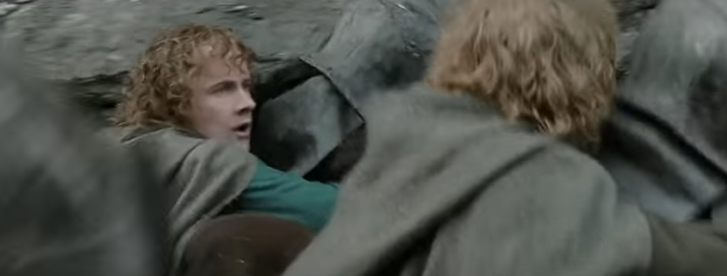

Music is another way continuity can be broken, for example, if the tone of the music doesn't fit with the film. I feel that the music in our film works well, as we did a lot of research and trial and error. For this evaluation I decided to research how changing the soundtrack to a film can also change the tone. Click here and here for the videos I found. One video is an example of changing the music of real films, and one is an independent example. 

Influences-
Inspired by the real media product 'Stray Dog' by Bertie Gilbert, we used iconography through mise en scene to provide insight into the lives of the characters in the title sequence. Including this at the start of the film allows a relationship to be established between the two characters right away, and the isolated placement of each object sets the tone of the film, reinforcing Georgie's loneliness and suffering. Although it was difficult to capture the complexity of Georgie's
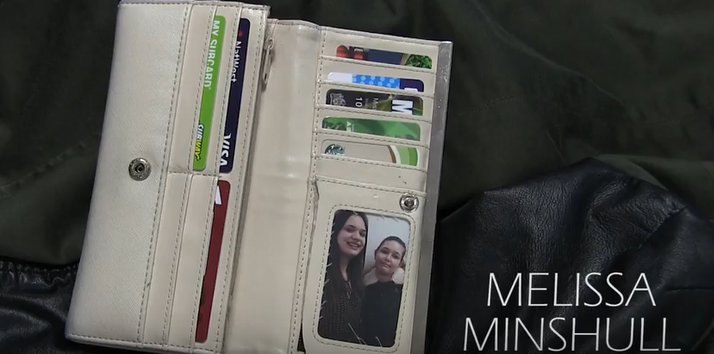
emotions in still images, we decided this would be a simplistic and tasteful way to tie together the names of the people in the group and the story's background information. The empty chair symbolises Charlotte's death and the emptiness now felt by Georgie, and the wallet with the photograph is used to establish a relationship between the characters immediately. Again, our inspiration came from the short film 'Stray Dog', which we found inspiring as it was made by someone a similar age to us, but using professional equipment, and being a real media product.  Stray Dog film


We were influenced by the real media product 'Our Girl' as it has a military theme. A hostage situation is referenced at the end of our film, and hints at the reason Charlotte didn't come home with Georgie. Our Girl clip. 
We were also influenced by an episode of EastEnders that explores mental illness and loss. However, we chose to show Georgie dealing with her emotions in a more positive way, by accepting help, rather than turning to drink. We did this as we wanted to create a sense of hope for sufferers, and education for non-sufferers, in the short time limit we had. EastEnders Clip


How does our film provide entertainment? 
 

People are often left feeling unhappy and unfulfilled in life because of things like social tension, inadequacy and abstinence. Richard Dyer suggests that consuming media can counteract these effects by providing entertainment and escapism through depicting:

  • Energy - This helps to restore the vitality stripped by urban life and working hard. Films often depict human power and activity, which can be inspiring and increase the energy levels of the audience. An example of this is Katniss Everdeen in the Hunger Games, as she fights for what she believes in and tries to survive, sparking energy in the audience as they progress through the film with her. The Hunger Games Trailer. Our film provides energy by drawing in the audience's interest and restoring faith surrounding support for mental health and recovery, as the audience wants Georgie to get better. Additionally, the dream sequence at the begining provides energy through the chaotic feel created. 

  • Abundance - This refers to having enough to spare, and the enjoyment of material things. Many people use media as a way of supplementing the lack of luxury in their lives. By seeing people with riches and material possessions in films, they themselves feel as though they have it, and experience what it is like to have abundance. An example of this in a film is The Princess Diaries, as it explores many girls' fantasises of becoming a princess and having a luxurious lifestyle. The character of Mia is relatable as she begins as a normal girl, but the dramatisation of her becoming a princess allows the audience to experience what something so exciting might feel like, which creates a positive feeling. The Princess Diaries Trailer. In our film, Georgie is presented as a normal girl, making it easy for the audience to relate to her, but suffering from a mental health condition. Her PTSD is reassuring for other suffers as the film depicts the beginning of her recovery, and provides information for non-sufferers. It also shows people what it would be like to suffer from PTSD, reminding them that their lives could be much worse, so allowing them to appreciate their own lives more.

  • Intensity - This refers to having excitement in life, which many people lack as they get pulled into the routines of everyday life. Consuming media products, such as action or thriller films, substitutes the lack of interesting events happening in the audience's lives, and allows them to feel a 'buzz'. A real life film that uses Intensity is 'Kong: Skull Island', as it depicts a mission to a remote island, with the crew unaware of what they will find. This situation is something most people will never experience themselves, so watching such events in the media substitutes this desire for excitement and adventure. Kong: Skull Island Trailer. Like 'Kong: Skull Island', our film has an element of magical-realism, as although the story is realistic and follows the conventions of a drama, the fact imagined Charlotte can be seen on screen adds a fantasy element. The dream sequence at the beginning of our film creates Intensity as it hints at violence, and depicts a war zone, which is often presented as exciting and intense in the media, and is somewhere many people will never visit. 

  • Transparency - This refers to being open and honest and effectively communicating, which counteracts parts of life such as manipulation, politics and democracy and advertising. In our film, Georgie is guarded about her PTSD, but Charlotte is used as a tool to explain Georgie's emotions and provide information to the audience. This transparency is what allows the film to work, as without it, the audience would easily become confused. Additionally, mental illness is often stigmatised, so by making it the centre of our short film, we hoped to create some transparency around PTSD, educating non-sufferers, and providing hope for sufferers in the audience. In order to make our depictions as accurate as they could be, we did research into the topic and how it affects people's lives. 

  • Community - Community creates a sense of togetherness and belonging, which offers comfort and support to the audience, especially those who lack close family/friends, or are part of high-rise urban life. A sense of community is created in our film as Georgie receives support from the psychiatrist regarding her PTSD, and reminds the audience that there is always someone there to help. However, Charlotte's presence highlights some sad truths regarding our society, that Georgie is so easily able to isolate herself, with only her unstable mind and figments of imagination for comfort. 
Me setting up the camera to film audience feedback


Wednesday, 19 April 2017

Evaluation 3

Our intention was to create a 5 minute fiction film that would explore PTSD and make the audience empathise with the character of Georgie. We made several changes to the film in response to audience feedback, such as adding an extra scene of dialogue in the hallway, and cutting out the bus scene. Many audience members said they felt there was too much walking, and not enough dialogue, which is why we made those changes.

How did we create meaning?
We used a two shot of Georgie and Charlotte in the kitchen, but positioned them at either end of the shot to convey how Georgie has become detached from herself and reality through her mental illness, and to reinforce the physical separation of the two characters. The fact it is a two shot highlights Georgie's reluctance to let go of Charlotte, and presents her trying to keep the memory of Charlotte close. 


We used a slight low angle on the shot of Charlotte on the stairs to present the degree of power she holds over Georgie's life. Although Charlotte is not really there, the effect Charlotte's death has had on Georgie is holding her to ransom and stopping her from moving on. Piano music is used throughout to add a sense of melancholy, which, when teamed with the slow paced editing throughout, creates a sluggish feel, mirroring Georgie's emotions.


Elliptical editing was used to cut out some of the less interesting parts, such as walking, as these non-essential scenes slowed down the pace of the film and made it less engaging. This can be seen from the first rough cut to the final project. I think that including more elliptical editing was a good idea as it made our film much more enjoyable to watch, and stopped some parts dragging. Click here for evidence of elliptical editing. Arguably,  the car acts as a partial wipe,  and allows a smooth transition into the next scene. We used backgrounds with similar colours, stone, blue and yellow, to again, allow a smooth transition between shots. 


An over the shoulder shot is used to show Georgie's therapy letter. We used this prop to reinforce where she was and the significance of this meeting for her recovery. This is also shown in the close up of her phone, which shows a reminder text regarding the appointment. This reinforcement of the therapy session throughout depicts it as an important event and pivotal point in Georgie's recovery. The mis en scene of this letter is paired with the posters on the wall in the therapy room to give a more convincing look to the set. 


These particular shots and edits were used to add emotion to the film. In the research video 'How did Aftermath make you feel?', it is reported that the emotion surrounding Georgie's PTSD was successfully translated to the audience. One of the main reasons for this was the shots and edits used, including the ones depicted above, and the close ups of Georgie's face at the beginning and end.


Questionnaires:
Below is our video questionnaire, which is the first bit of audience feedback we received. We asked 5 people in our target demographic. All were students at Barnsley College, and were between the ages of 15 and 20.


Results gathered from the first questionnaire
Most people said they liked the sound of our film, and would watch it. Many people said You tube would be a good place to exhibit the film, which we agree with as You tube is a good place to showcase independent films. A lot of people said they would expect to see the film in the cinemas, but our budget would not allow for this scale of distribution. If we were to re-make the film professionally, it may be distributed to cinemas.

Results gathered from the final questionnaire
Looking at the results as a whole, we received much more positive feedback in the later questionnaires. This is probably down the the changes we made, such as cutting out scenes of walking and including more dialogue. In the final questionnaire, 100% of people gave the film 8 or above out of 10. If we were to generalise this to the rest of the population, it would suggest success for our film.

In the final questionnaire, 100% of people said they understood the plot, which is an improvement from the 80% of people who said they understood it in the second questionnaire. This shows we were successful in developing the film into a much better piece.


Most people said they thought our film was a drama,which corrilates with the genre we intended our film to be. 20% of people said they thought our film fell into the action genre, which is probably because of the military theme and dramatic dream sequence at the beginning. No one said the film was romance, horror or other, which shows we were effective in translating our message to the audience.


How did we change the film in response to audience feedback?
In response to feedback, we made alterations to the sound levels in order for the dialogue to be easier to hear. As a consensus, the audience felt that there could have been more close ups included in our film in order to create more intimacy, and allow the emotions of the characters to translate more effectively. In response to this, we added close ups getting tighter in around Georgie's face in the final scene. Additionally, the audience commented on the sound levels throughout, with one suggesting we used external mics, which is something to consider next time we produce a film.

The genre of our film was understood to be a Drama which correlates with the one intended for Aftermath. This shows that our film has been successful in displaying the conventions of the genre, such as using the army jackets and the sound of gunshots in the opening scene, and so suits the context of the film. People generally expected to see our film in the cinema or through film festivals, which is what we too expected for our film, as Dramas are a popular and successful genre. However, the low budget of our film would probably mean it would have to be an independent project, and the most likely place to distribute it would be to Youtube.


Changes can be seen between the different cuts of the film:

How did our film make the audience feel?

87% of the people that watched our film understood it's plot and the twist that came at the end of the clip. Georgie's PTSD caused her hallucinations, which we attempted to represent through Charlotte's character. We tried to make Charlotte's death subtle in order to capture the sensitive and heartfelt nature of Aftermath. Due to the limited timeframe we had, we had to make the ending of the film more prominent so that the message could be understood better and be more impactful. Most of our responses said that they wish that Charlotte's status had been referenced earlier in the film so that the ending was more clear, so we added some extra scenes to show Charlotte jumping around the house, such as Charlotte's sudden appearance in the kitchen, through the use of jump cuts in editing.

We used music to create a melancholy tone, and many people agreed that the music fitted well. Some people suggested we remove the clock ticking from the counselling scene as it was distracting and made our actors difficult to hear, which we agreed with, so removed for the final cut. They also suggested reducing the volume or replacing the sound of ringing after the gun is fired in the flashback scene, which smoothed the transition from the war scenes to the bedroom scenes. All of these suggestions were very helpful and helped to make our final piece successful.


I decided to gather some final feedback from social media sites on how our film made people feel. Some responses are evidenced below:


Overall, considering all the feedback we have received, I believe our film to be a success as we have achieved everything we aimed to. Our intention was to create a 5 minute fiction film that would explore PTSD and make the audience empathise with the character of Georgie, which I believe we have done. This is supported by the questionnaires and graphs, as well as social media feedback.


Wednesday, 5 April 2017

Evaluation: Question 1

Evaluation: Question 1
For our A2 Media product, we wanted to incorporate the codes and conventions of a Drama film without fully conforming to them. To achieve this, we created a lead character that subverted gender stereotypes and created an unexpected ending with a twist. Aftermath follows the lead character, Georgie, attempting to overcome her PTSD after returning from the war. The plot conformed to Drama conventions as it deals with emotional and relatable issues that are relevant to the affairs of our modern society. However, while Dramas usually reach a satisfying conclusion, our film doesn't have a happy ending and leaves the viewer questioning what might happen next. Thus, the film inhabits some aspects of a Thriller.
Genre:
We decided that for our film to successfully achieve the conventions of a Drama, we would have to choose an appropriate setting. This is why we chose the premise of Georgie returning from her tour in Afghanistan and readjusting to her domestic life. This would give us the opportunity to reflect the relatable emotions of loss and anxiety that Charlotte experiences due to the death of her partner. Despite the fact that PTSD is a common disorder that many people experience, it is not a topic that is always highlighted by the media and we wanted to raise awareness of this fact in a respectful and informative manner. Our film largely conforms to the stereotypes of a Drama due to it's central focus of one character and the realistic hardships and struggles that they face. Our film could be largely considered a hybrid-genre as it also includes flashbacks to the war. However, these flashbacks are only brief and we felt that it would be more appropriate for our film to be categorised as a Drama due to it's specific pivot on mental illness and relationships rather than the battlefield. Some of the main conventions of Drama films that we conformed to in our film were the inclusion of realistic characters and settings (Doctor Sullivan and the counselling room), watching the main character develop and progress (Georgie's realisation that Charlotte is in fact an hallucination), the focus on a conflict within oneself or between two characters (Georgie's refusal to let go of Charlotte) and a happy ending (Georgie accepting help from her psychologist).
Our film could be considered to subvert Drama genre conventions in that it does not have a 'typical happy ending.' A similar subversion can be seen in The Green Mile (1999) that sees a prisoner guard form a friendship with a wrongly accused inmate, only to have to watch him be executed for a crime he did not commit. Furthermore, we took inspiration from the psychological horror Jacob's Ladder (1998) for the character of Charlotte, as both of the leads turn out to be dead. Although, our film wasn't a horror, it's important to reference Jacob's Ladder (click here for the trailer) as it helped us to understand how we could create an effective twist.
Our film adopted some aspects of the Thriller genre.
My original hairstyle before we refilmed.

This year we were more comfortable as a group when dealing with the technical areas of our course, such as maintaining continuity throughout our A2 film. This year our film had to be roughly five minutes which caused the time we spent filming to become longer. This made it incredibly difficult for our film to remain continuous, as there were more chances that some of us might change our appearance (for example, a haircut or colour change), before filming could be completed. This became a problem for us when we realised that we had to reshoot some scenes.
In the original shots, my hair was long and curly with a bright pink hue. But by the time that we discovered that we had to reshoot these scenes, my hair was three inches shorter and the pink in my hair was fading drastically. To wait for my hair to return to the length and colour that it had been in the original shots would have took too much time, so we refilmed these scenes and eradicated the chance of this problem occurring again, by making me wear a hooded coat and purple scarf for the rest of the film. An example of continuity errors in real life products, can be seen in the film Commando, where after chasing down Sully, the yellow Porsche is left destroyed on it's left side until Arnold Schwarzenegger drives away and it is suddenly fine.
My final hairstyle for the refilm.
Our film both subverts and conforms to the typical conventions of a Drama. We stuck to the key themes of exhibitng real life situations, realistic characters and intense interactions between our two main leads. We wanted our film to be familiar to our audience so that they would know what to expect and feel an emotional attachment to our characters. We achieved this through creating a flashback scene that would reflect to our audience that the characters had both been witness to the horrors of war and establish a relationship between them that the audience could become intrigued by.
A shot from the Flashback sequence that shows a gun to Charlotte's head.
We followed this war flashback, with a melancholy title sequence that showed the inside of Georgie and Charlotte's home together, establishing their relationship beyond the battlefield and making them more relatable to our audience. The use of shots of various household objects, such as flowers and photographs, highlight that Georgie and Charlotte are a couple and gives their situation a sense of normality, increasing the empathy of the audience, as they realise that this couple are just like them. In many ways, these two juxtaposing scenes are 'binary opposites' (Levi Strauss) as the flashback deals with anger and action over a foreboding soundtrack, while the title sequence conveys loss and isolation through sombre, piano music. We wanted to ensure that the fact that Georgie and Charlotte were a young couple with their whole lives ahead of them was emphasised as a way of reflecting the tragedy of Charlotte's death and Georgie's PTSD. We achieved this through showing the characters with their mobile phones, referencing pop culture (Georgie is frequently seen in a Bambi pyjama top to showcase her naivety) and dressing them in fashionable clothing. This would increase the dramatic impact of the ending and move our audience emotionally.
The Title Sequence that establishes the home life of Georgie and Charlotte.
Nonetheless, there are moments in Aftermath when we don't conform to the conventions of Drama, as our film dosen't reach a satisfying conclusion. Usually, in Drama films there is a sense of resolution for the characters and equilibrium is restored. For example, in Good Will Hunting, the main character suddenly finds his life thrown out of balance when he passes jail time in favor for therapy sessions. At first, these therapy sessions are met with apprehension by the lead character and he refuses to cooperate. But towards the end of the film, she finally opens up to his therapist and begins to make improvements to his personal relationships. For our ending, it is left ambigious as to whether Georgie finally accepts that Charlotte has gone and whether she begins to battle her grief. In subversion, we left the ending open and invited our audience to decided whether Georgie overcomes her PTSD and finally moves on.
We did not add any 'parody' to our film because we wanted to make sure that it maintained it's serious tone. We decided that we wanted to film Aftermath from the perspective of Georgie as we wanted to make the audience feel sympathetic towards her and draw attention to some of the stigmas surrounding PTSD. We felt that challenging the stereotype of soldiers having to be incredibly strong and emotionless was important as many people forget the impact that being a first hand witness of war can have on an individual. We did some research into how PTSD can affect a person's day to day life in order to be able to reflect this correctly and sensitively in our own film. We discovered that many of the one in three individuals suffering from PTSD, regularly re-experience their trauma through flashbacks, nightmares and physical sensations such as sweating and nausea. We filmed mostly using  hand-held for the nightmares in order to reflect Georgie's anxiety and increased the saturation to heighten the surrealism that dreams have. We took influence from Forrest Gump in the respect that the film continually shows Forrest revisiting his past from the comfort of a bench.
Forrest Gump's non-linear narrative was an influence through it's theme of 'reflection.'


We wanted to keep Charlotte's status as to whether she was alive or dead ambiguous by not revealing her death until the very end. However, there are subtle hints throughout the film that Charlotte isn't alive. These hints composed of nightmares, breaking continuity by having Charlotte appear in one place and then suddenly in another and further by other characters being unresponsive to Charlotte's exsistence. We could confirm through feedback from our audience that they 'suspected Charlotte might not be real' from the beginning but were not completely certain until the film's end. This aided us in noticing that we had been successful in creating suspense and intrigue from our audience, which had been one of our main goals and finally, that our film had been enjoyable and entertaining. 
Is our film entertaining?
Richard Dyer's theory of entertainment states that the consumption of Media can counteract feelings of loneliness, boredom, absence, inadequacy, discontentment, social tension and abstinence. Dyer believes that films supply us with energy, abundance, community, intensity and transparency which are all key factors to aiding an audience to feel fulfilled when watching a film.
Energy:
Dyer believes that an urban lifestyle, alienated labor and consistent hard work are all pressures on society that as individuals we individually seek to adhere to. Dyer believes that entertainment gives individuals the ability to practice 'escapism' by watching characters 'act out' their desires. For example, Dyer states that the media uses energy in their films to inspire their audience and increase their energy levels. Films achieve this by showing characters showcasing their power through passion and physical activity. Star Wars (1977) achieves this as it shows a farm boy taking control of his destiny and going on a daring adventure that includes fighting for a larger cause. Our film achieves this by allowing the audience to become involved in the main characters journey to recovery and acceptance through the use of close ups and point of view shots. Furthermore, we supply the audience with physical energy by using music and fast paced editing to reflect the dangerous and thrilling atmosphere of the battlefield in the film's flashbacks.
Abundance:
This particular factor addresses the lust that society has for material things and the security that comes with having enough to spare. It could be inferred that audiences watch films in order to fill this void of luxery and use the character as a way to experience what possessing lots of money and expensive materials would feel like. A keen example of this would be Pretty Woman (1990) where Julia Robert's character gets to experience the advantages of having a disposable income when she is hired as an escort for Richard Gere. Because Julia Robert's character is relatable and comes from a working class background, the audience is able to use the character as a voyeur, from which they can imagine what their lives could be like. We achieved this feeling in our film through depicting Georgie as a everyday character who suffers from a common illness that many people might not feel comfortable openly discussing. By watching our film, the audience gets to understand the effects of PTSD by providing information for non-sufferers and learn to appreciate that they don't have to endure the effects of this disorder. It will also aid those that have the condition to feel less alone as they can relate to our lead character.
Julia Robert's character goes shopping in the film.
Community:
Community allows audiences to be brought together through the films they watch and create a sense of togetherness by opening them up to discussion. Community further provides comfort for individuals that may not have an active social life and struggle to find time to relax with friends due to their hectic schedules or social anxiety. A sense of community is showcased in our film through the support that Georgie receives when discovering that she is unable to move on from her partner's death. The help that the therapist, Doctor Sullivan, provides indicates to the audience that they should never be afraid to ask for help and that there is always someone that we can turn to. Arguably, Charlotte's existence and the persistence of her memory to not be forgotten highlights to audiences that it is very easy to isolate ourselves and withdraw into our ourselves. Memento (2000) is a clear example of this sad truth, as it shows the main character consistently doubting the people around him and even himself due to memory loss.
Intensity:
Humans crave excitement. Intensity refers to this pleasure, that can sometimes be lost when caught up in the daily routines of life. By consuming thrilling or adventurous media products, audiences can supply themselves with a quick 'buzz' and substitutes for any lack of excitement in their real lives. A film that shows a clear example of intensity would be Captain America: The First Avenger (2011) as it follows a young man's thrilling journey from a World War II soldier to a fully fledged superhero. These events are entirely fictional and not possible in the real world but the film's non-stop action, special effects and feel good atmosphere help to keep the audience on the edge of their seats and entertained by stepping into a fantasy scenario. Our film is similar in that it has a hint of magical-realism, as despite the film's realistic topic and relatable characters, Charlotte is actually just a hallucination that Georgie has due to her grief and the fact that the audience can see her on screen is to prevent them from realising this twist too early in the narrative. Our film further provides intensity, through it's flashbacks. These scenes are more action packed than the rest of the film and hit at violence and chaos, aspects of war that most of our audience won't have ever experienced before.
Transparency:
Georgie isn't very open about her PTSD which results in the relationship between herself and Charlotte to be very fraught and strained. Charlotte's presence is not only used to establish a relationship for Georgie nevertheless to provide the audience with a reason for Georgie's erratic behaviour and a device for understanding how complex the effects of PTSD can be. This is an example of transparency, the definition of being honest and effectively communicating with others to oppose the manipulation that individuals experience through being involved in politics and witnessing advertising. We relied on Charlotte's presence to help our film be understandable so that the audience wouldn't become confused by watching Georgie interact with herself and give them an insight into how PTSD can look/feel. We wanted our film to aid in helping end the stigma associated with mental illness by supplying them with a character with a 'strong' career so that they could become better involved about how the disorder affects a wide range of people, both male and female. To ensure that we did this correctly and effectively, we researched into the topic and wrote notes on the blog that we could reference when filming.

Evaluation: Question 2

Evaluation: Question 3

Click for Question 3 here.