We decided to re-shoot the therapy session scene. This was because we felt the scene lacked dialogue and interaction between the characters. We added lots more close-ups to allow the audience to be much more engaged with the character's feelings, especially as this particular scene is so emotive.
We felt the scene needed to deliver more clarification about the imaginary presence of Charlotte. Although hints were placed in the preceding scenes, we wanted a subtle but shocking reveal that cleared up any speculation in the audience's minds.
Re-shooting the scene allowed us to capture Georgie's thought process, and learn more about the traumatic situations that sparked her hallucinations. In the re-shoot, Georgie's tours of Afganistan are referenced, which weren't included in the initial shoot, and allow insight into the reasons behind Georgie's fragile mindset.
Monday, 6 March 2017

Wednesday, 1 March 2017
Rough Cut Questionnaire Audience Response
Rough Cut Questionnaire: Responses
In order to gain a better understanding of our potentional audience and to be given an early opportunity to make necessary changes, our group released an audience questionnaire with a link to the rough cut of our film on the social media network Facebook for people to answer at their own leisure. Upon sharing the questionnaire, our film was not fully completed, so critques about the lack of music and credits were expected but suggestions about how and when they could be incorporated and comments on the cinematography, editing and performance were valued by our group, as it meant that we could add to our film before our coursework deadline.The first question that we sought to ask our potentional audience was if they enjoyed Aftermath. Of our eight responses, all of the people stated that they enjoyed the film fairly well, with the most percentage going to eight out of ten on the scale. Even though we are pleased that our film has been positively recieved, we wanted to know how we could make our film more entertaining, so we followed this question with ways that they could add their imput to the film's production, with open questions such as 'what do you think was successful about our film' and 'what suggestions could you make to improve it?'

87.5% of the people that watched our film understood it's plot and the twist that came at the end of the clip. Georgie's PTSD means that she can be prone to hallucinations which we attempted to represent through the inclusion of Charlotte's character. Although, we tried to make Charlotte's death subtle in order to capture the sensitive and heartfelt nature of Aftermath, due to the limited time that we had for the running time of the film, we had to make the ending of the film more of a revelation so that the message could be understood. Most of our responses said that they wish that Charlotte's status had been referenced earlier in the film so that the ending was more clear. This could be done through including more moments such as, Charlotte's sudden apperance in the kitchen, throuh the use of jump cuts in editing.


Because of the serious subject matter, the occasional use of profanity and the implication of violence, we believed that our film would generally appeal to a more mature audience. Looking at the research gathered from our questionnaire, we found that audiences thought our film would be mainly watched by teenagers and young adults. As a group, we wanted our film to be able to appeal to a wider demographic and so we chose to explore how PTSD can affect individuals day to day lives. This is a relevant subject for audiences as it can be the result of anyone who has gone through a traumatic expoerience.


Tuesday, 28 February 2017
Final Film Posters Background Research

We chose this poster as our final film poster as it is simplistic and effectively communicates the backstory of our film. The poster shows both characters, Georgie and Charlotte, and hints at the cause of some of the issues displayed in the film.


Similarly, the teaser poster for 'Logan' shows just the iconic hand of Wolverine, held by that of a child. Without giving too much of the plot away, this poster speaks volumes about the backstory of the film, and the emotion associated with Wolverine's life, and having a child involved in conflict. We used similar techniques to capture this in our teaser poster.
The main poster is much more visually captivating, using dramatic lighting and bold lettering to capture audeince attention. This poster contains a long shot of the main character, similar to the twoshot of the main characters on our poster. This reveals more about Wolverine as he is dressed in smart clothes but looks determined as though on an important mission. The poster is still simplistic, but has much more depth.
Due to Wolverine being part of a franchise, the names of the actors are not needed on the poster, as the audience are already aware of the cast, especially Hugh Jackman. Our poster contains the actor's names and information about the production company across the bottom, as our film has no pre-established fan base.
Wednesday, 22 February 2017
Music: Research
Similar Music: Research

Before finalising the music for Aftermath, I decided to look into similar films and the music that they used to set the tone of a particular scene. In The Deer Hunter (1978) the theme song 'Cavatina' composed by Stanley Myers is credited as a classical guitar piece that is used to primarily highlight the feelings of regret, nostalgia, longing and love of Robert De Niro's lead character after he returns from the Vietnam War. The piece first orginiated in 1970 for the The Walking Stick, a film about a woman who suffers from polio and the effects a handsome stranger has on her life. However, 'Cavatina' didn't achieve commercial success until it was featured as the soundtrack for The Deer Hunter whereupon it became a UK Top 20 hit. The song's gentle, melancholy quality would be fitting for the closing credits of our film as it would capture the sadness that Georgie feels when she realises that Charlotte is truly gone. The following link is a preview of 'Cavantina':
https://youtu.be/qT4IS2N5ltI
 | ||||
| We believe that the music previewed in the link above would be suitable for the flashback scenes in our film. |
Friday, 17 February 2017
Shooting Pack 6 - Exterior house scenes
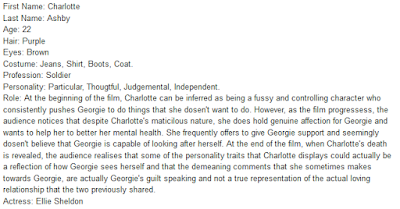
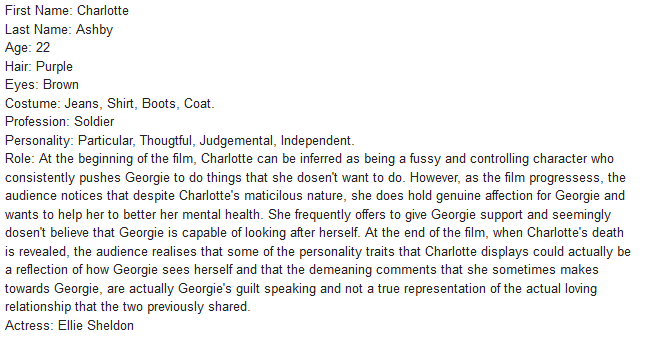
The following is a list of things we needed/used during filming of the extrior house scene.
Shot list


Script

Storyboard

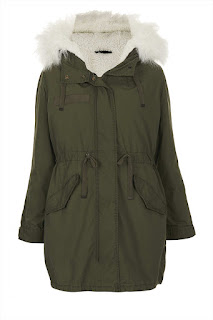
Props

Character Profiles

Equiptment.


Shot list


Script

Storyboard

Props


Character Profiles

Equiptment.

Wednesday, 15 February 2017
Research into Viral Marketing

Viral Marketing use exsiting social media websites and technologies to try and increase brand awareness. It can be delivered through word of mouth or enhanced by social networks.

In recent years the best example of Viral Marketing is for Christopher Nolan's 2012 film, 'The Dark Knight Rises'. During the marketing campaign white bat graffiti appeared in different locations around the world. The idea behind this was for fans of the film to find the bat graffiti and take a photo using their mobile phones. Once they had taken the photo they had to upload it to social media using #TDKR2012, on Twitter or email the photo in. For every picture sent in, it unlocked a frame from the trailer. The entire trailer was unlocked in under 24 hours.
These are a few examples of the marketing campaign.


The video below shows the hype surrounding the markleting campaign.
Although it is uncommon for short films to have viral marketing, due to small budgets, the internet is a fantastic way to create hype and gain awareness.
Creating a short trailer with a tease of the film, posting this on social media mean it would be seen by friends & family, also by people who follow you on Twitter etc. Family would share the post as they would be proud of your work. There are film trailers posted on the likes of Facebook regularly which shows it is an extremely popular way to gain interest in the film. A positive thing about using Facebook to advertise the film is that it it free, which helps for small films.

Subscribe to:
Posts (Atom)